
Lovćen National Park
“Small but mighty” is almost the right word after spending a few days in the Lovćen National Park. With just 6,220 hectares, the Lovćen National Park, which was designated a national park in 1952, is the second smallest of the Montenegrin national parks.
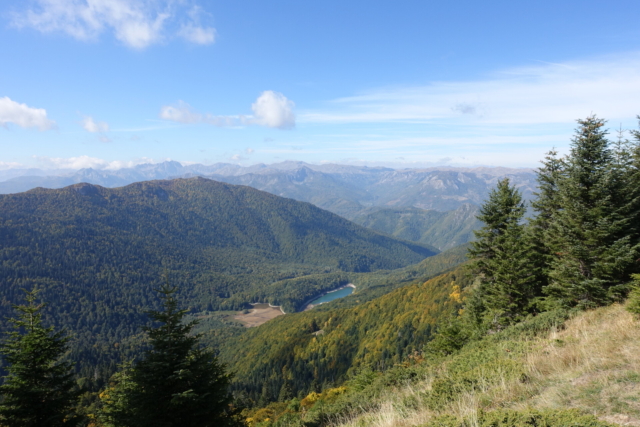
But one should by no means be misled by this. Due to its geographical location at the forefront and the coastal mountain range rising almost vertically from the coast to a height of 1600 m, Lovćen forms a weather barrier with impressive weather phenomena and extreme changes between the windward and leeward sides in a very small area. While the head is still covered in clouds, the feet are already in the sun, they say. A narrow ridge here separates the Mediterranean climate and the continental climate of the interior of the country. These weather phenomena have led to very different vegetation zones on a small scale. To this must be added the historical significance of Lovćen National Park with its cultural and historical remains from different periods, foremost among which are the Mausoleum that today awaits discovery by the visitor.
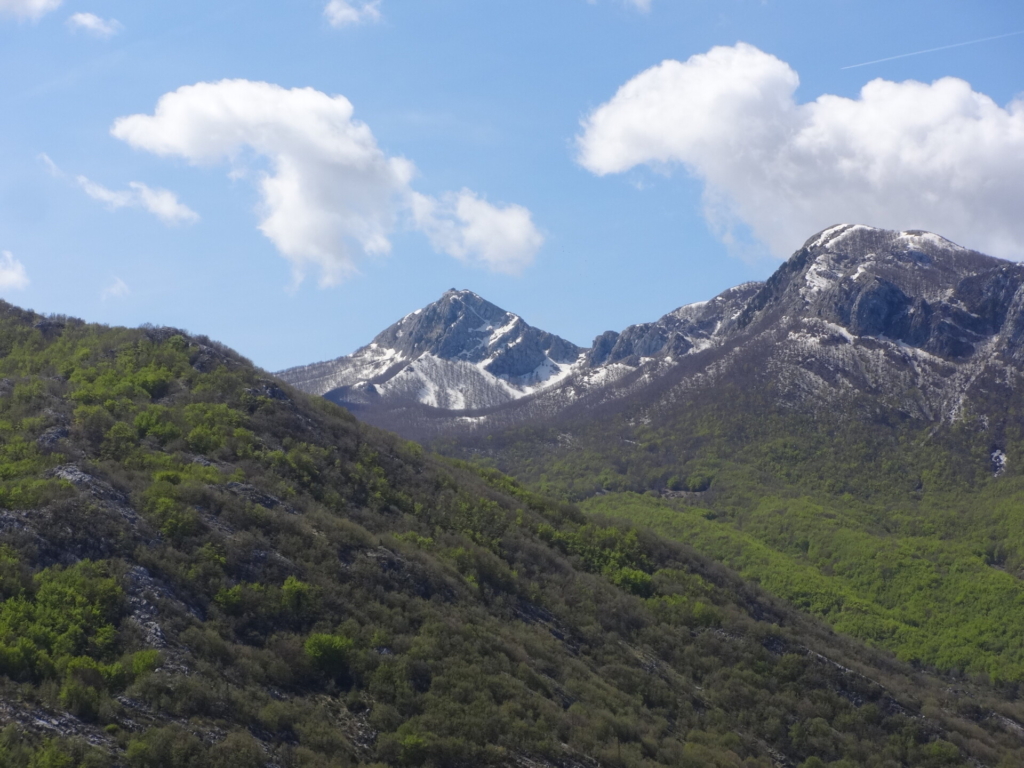
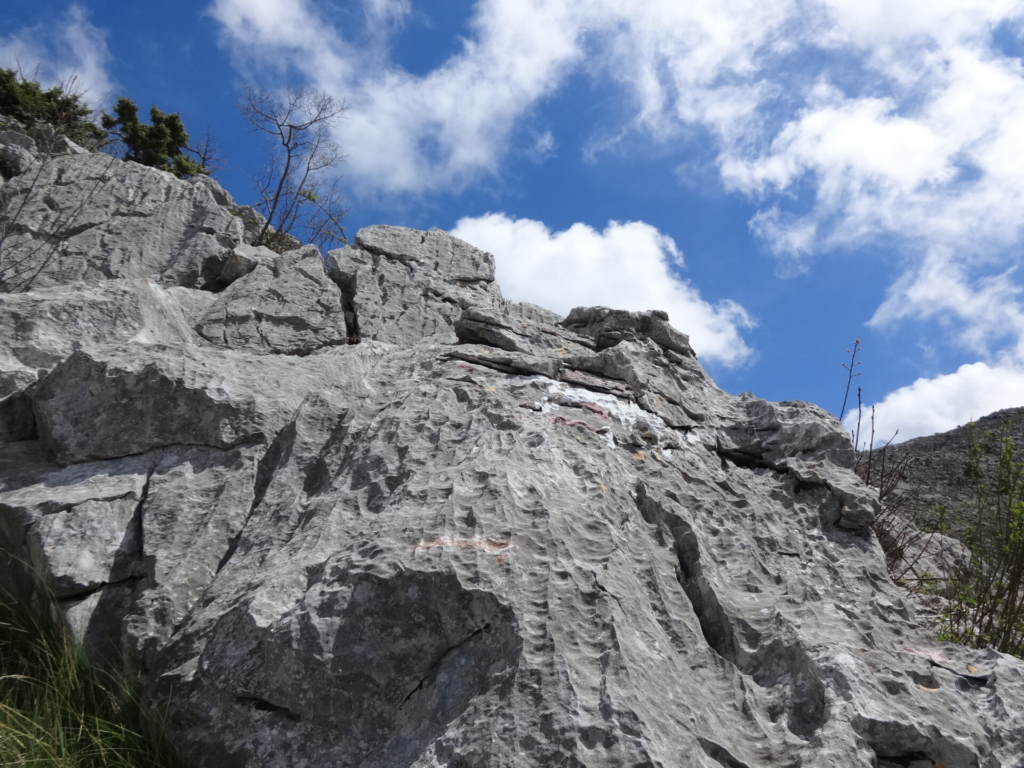
Geomorphologically interested park visitors will be enthralled by the karst forms that are revealed here, which are also particularly easily accessible thanks to the Habsburg road and path network that has remained well preserved in the park to this day. The mountain slopes in the park are very rocky, with numerous typical karst formations such as caves, numerous dolines, and beautifully developed karst fissures that have given the area its special and characteristic appearance. Of the two highest peaks in the park, Lovćen and Jezerski Vrh, the latter holds special significance because here stands the mausoleum of the Montenegrin prince, bishop, and famous poet Petar II. Petrovic Njegoš.
Access to the park is available from Budva and Cetinje. From Budva or Tivat, you now have the choice between the legendary, historic serpentine road and an equally spectacular new cable car. You can also get to the park from Cetinje, on a historic former caravan road that connected the former capital Cetinje with the ports on the coast.
Particular highlights of protected areas within the park boundaries are:
- The lake below Jezerski Vrh is an important herpetological (amphibians and reptiles) reserve
- the Bosnian pine forest (Pinus heldreichii)
- Konjsko, a beech forest reserve
- Ljubin stream, a Black pine reserve
- the water reserves of Rueva lokva
Nature
Flora
The flora of the Lovćen massif consists of approximately 1,300 plant species – a huge number given the relatively small area. Among them are an astonishing number of endemic and rare plants, as well as numerous medicinal, aromatic, honey, and ornamental plants.
The forest vegetation covers around 70% of the area of the national park. Following the bushes and low forests with black hornbeams is a belt of beech forests. Over these, on the northeastern slopes of the mountain Štirovnik and partly on Jezerski Vrh, a considerable number of rare black pines can be found.
The remaining 30 % of the national park area is covered with pasture and karst vegetation.
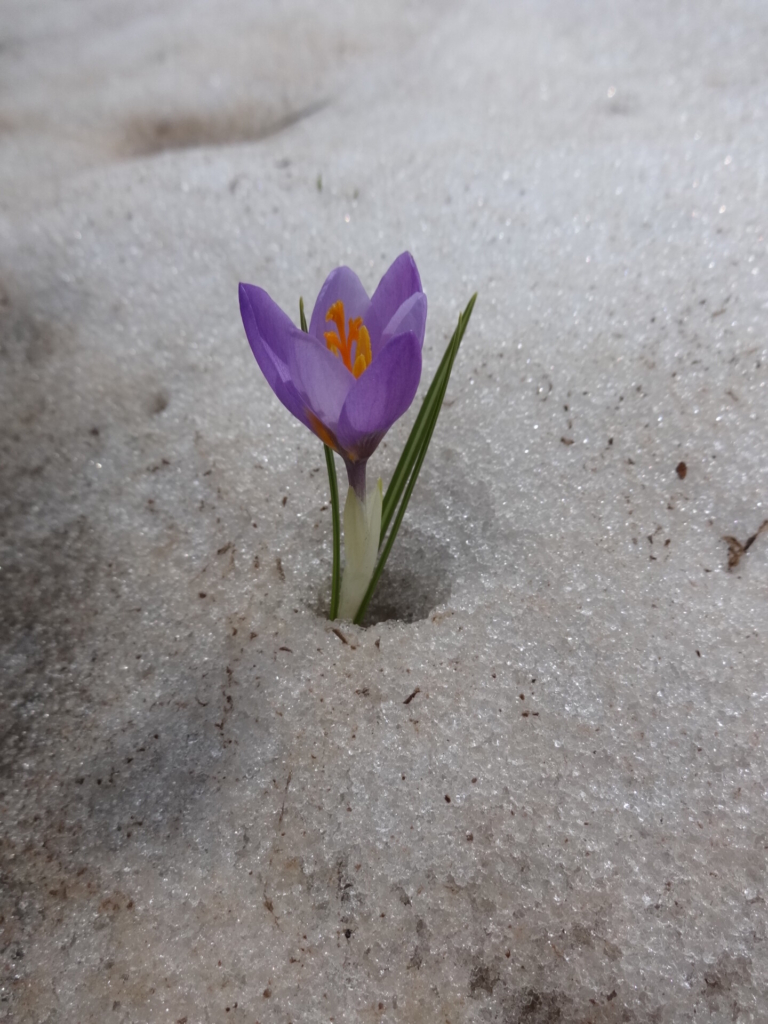
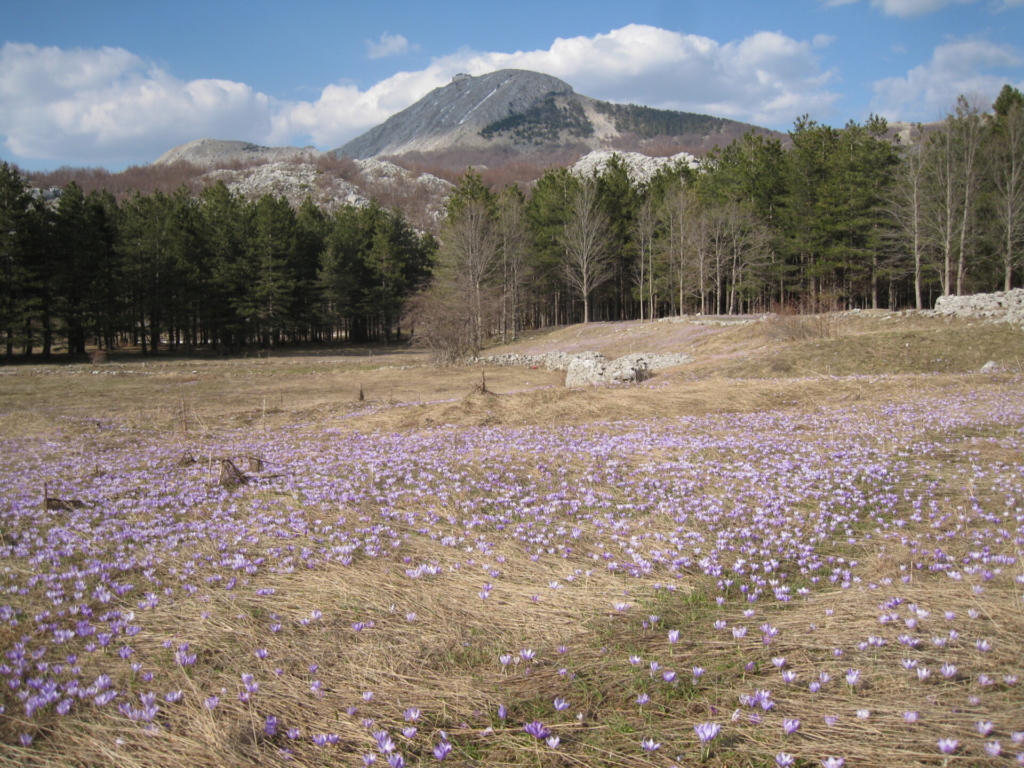
Endemic and rare species in the National Park are the Lovćen bellflower, saxifraga federici-augusti (a saxifrage), Grisebach's wild tulip, Moltkia, common laburnum, Seseli globiferum (a mountain fennel), Fritillaria orientalis (oriental fritillary) – to name just a few significant species.
Fauna
The diversity of different habitats and ecological niches, the climatic extremes and the different types of forests, especially beech and oak forests, as well as the typical karst terrain have contributed to the development of a particularly diverse and complex fauna in the Lovćen National Park.
Mediterranean and sub-Mediterranean species are characteristic of the insect fauna. In the park area there are a whopping 85 butterfly species, unfortunately also 10 bark beetle species and a whopping 45 species of hoverflies.
The area below Jezersko is a veritable breeding centre for various species of amphibians, such as the pygmy marbled newt, common toad, pool frog, the rare Alpine crested newt and the yellow-bellied toad. Due to this diversity in a small area, the area has been classified as a herpetological reserve of European importance. The fauna of Lovćen includes a significant number of reptile species: Hermann's tortoise, Dalmatian rock lizard, Mosor rock lizard, nose-horned viper, meadow viper, sheltopusik, etc.
There are over 200 bird species in the Lovćen National Park – some of them nest here, others are migratory birds on their way through. Particularly noteworthy are the golden eagle, the eastern imperial eagle, the peregrine falcon, the Eurasian sparrowhawk, the rock partridge, the rock dove and many more.
Large mammals that live in the park include wild boar, wildcats, wolves, bears and deer. Smaller mammals that live here include the white-breasted hedgehog, rabbits, squirrels, the forest dormouse, the eastern broad-toothed field mouse and the endemic Montenegrin vole.
Culture
The culture and history of the Lovćen National Park are also reflected in a diverse architectural heritage. The memorial sites, sacral and profane vernacular architecture, and various technical facilities are concentrated in the area of Ivanova Korita and the small village of Njeguši located on the park’s border.
In Njeguši, in the hamlet of Erakovici, you can find museum buildings dedicated to the Montenegrin rulers of the Petrović dynasty. On Mount Jezerski Vrh, one of the highest peaks of the Lovćen massif, stands the impressive mausoleum of the famous Montenegrin poet and prince – Bishop Petar II. Petrovic Njegoš.
The sacral architecture of the Njeguši region is also characterized by rural churches with a simple architecture. By the mid-nineteenth century, 17 such churches had been built in the region.
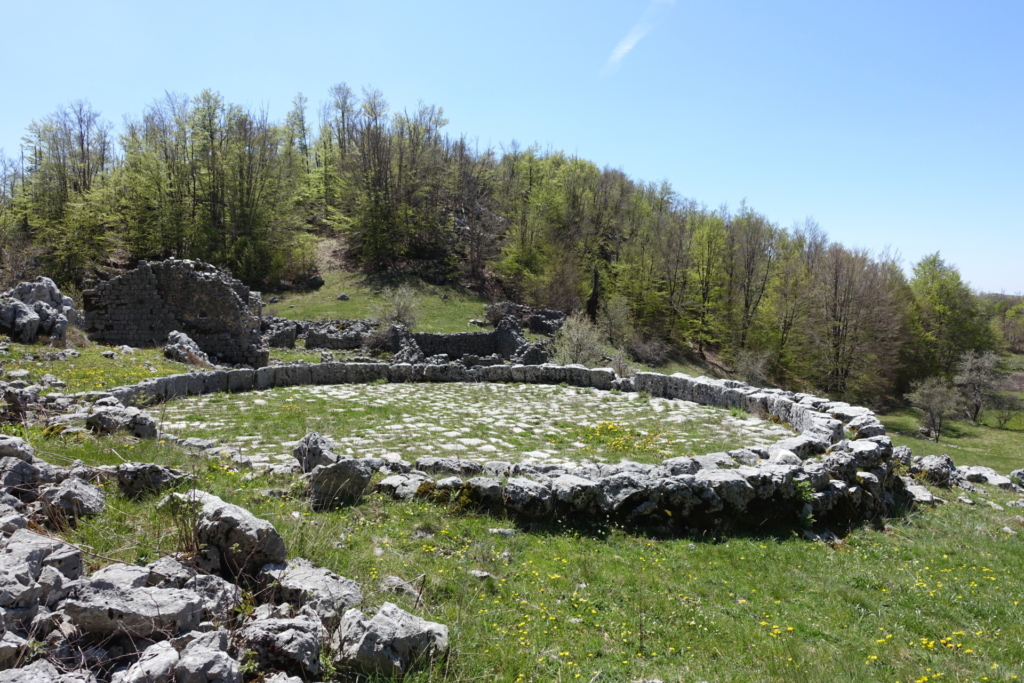
In the wider area of Njeguši, numerous historical elements can be found in the architecture, such as traditional stone houses with stables, huts, guvna (circular gathering places in old Montenegro surrounded by a knee-high wall), ublo (cisterns for collecting rainwater) and stone courtyards.
Of particular architectural importance is the ancient caravan route with its famous Lovćen Serpentines, which extends from the Njeguši Mountains to Kotor.
Tourism
Active holidaymakers and nature lovers will find numerous activities in the National Park. Whether hiking, cycling or simply enjoying the wonderful, pristine nature – the park has something for everyone. Culture lovers will enjoy the traditional villages, churches and historical monuments.
Visitor centre
The visitor centre of the National Park is located in Ivanova Korita, which also provides the best starting point for hiking in the park. Numerous nature exhibits are presented to visitors in a small annex of the information centre. Here you can see a cross-section of the local fauna, such as wolves, foxes, and many other animal species. Characteristic bird species of the region are displayed in dioramas that show them in their natural habitats here.
There is also a souvenir shop here, where you can purchase authentic handmade products, souvenirs, cards, and various publications.
Opening hours:
- During the tourist summer season daily from 9:00 am to 5:00 pm
- Outside of the season on weekdays 10:00 – 15:00
Hiking
There are five signposted circular hiking trails of varying length and difficulty levels. The markings on the trails were designed to emphasize as much variety as possible. Therefore, the hiker will find both cultural and natural attractions along their route. There are several rest areas along the trails. Despite the markings, it is strongly recommended to bring a hiking map. During the hot summer months, carrying enough water is a must!
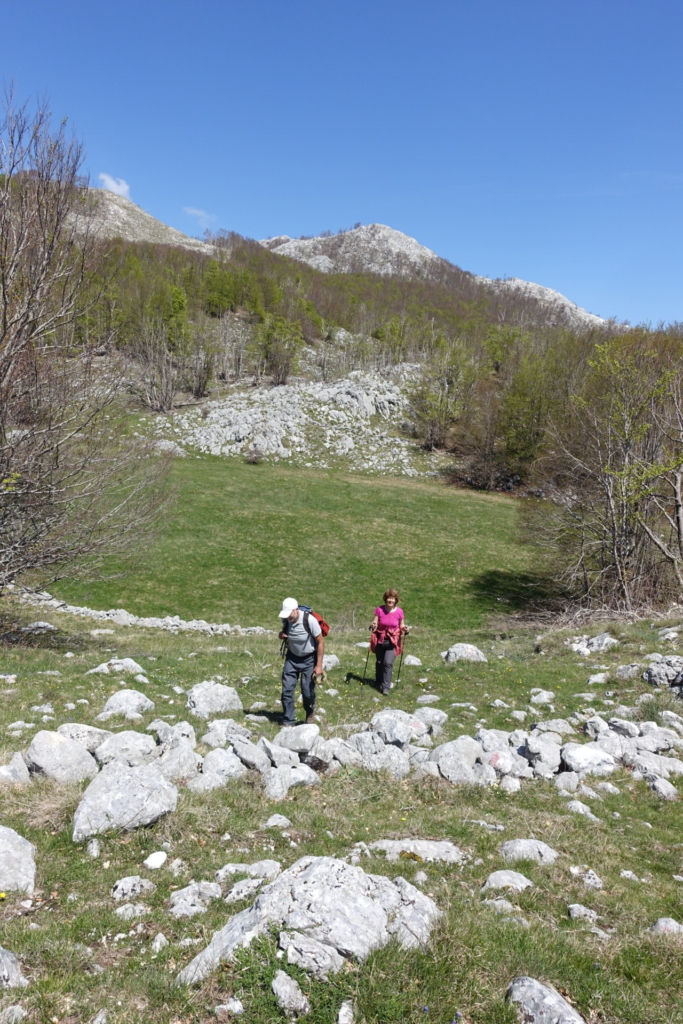
The National Park Administration recommends the following hiking tours:
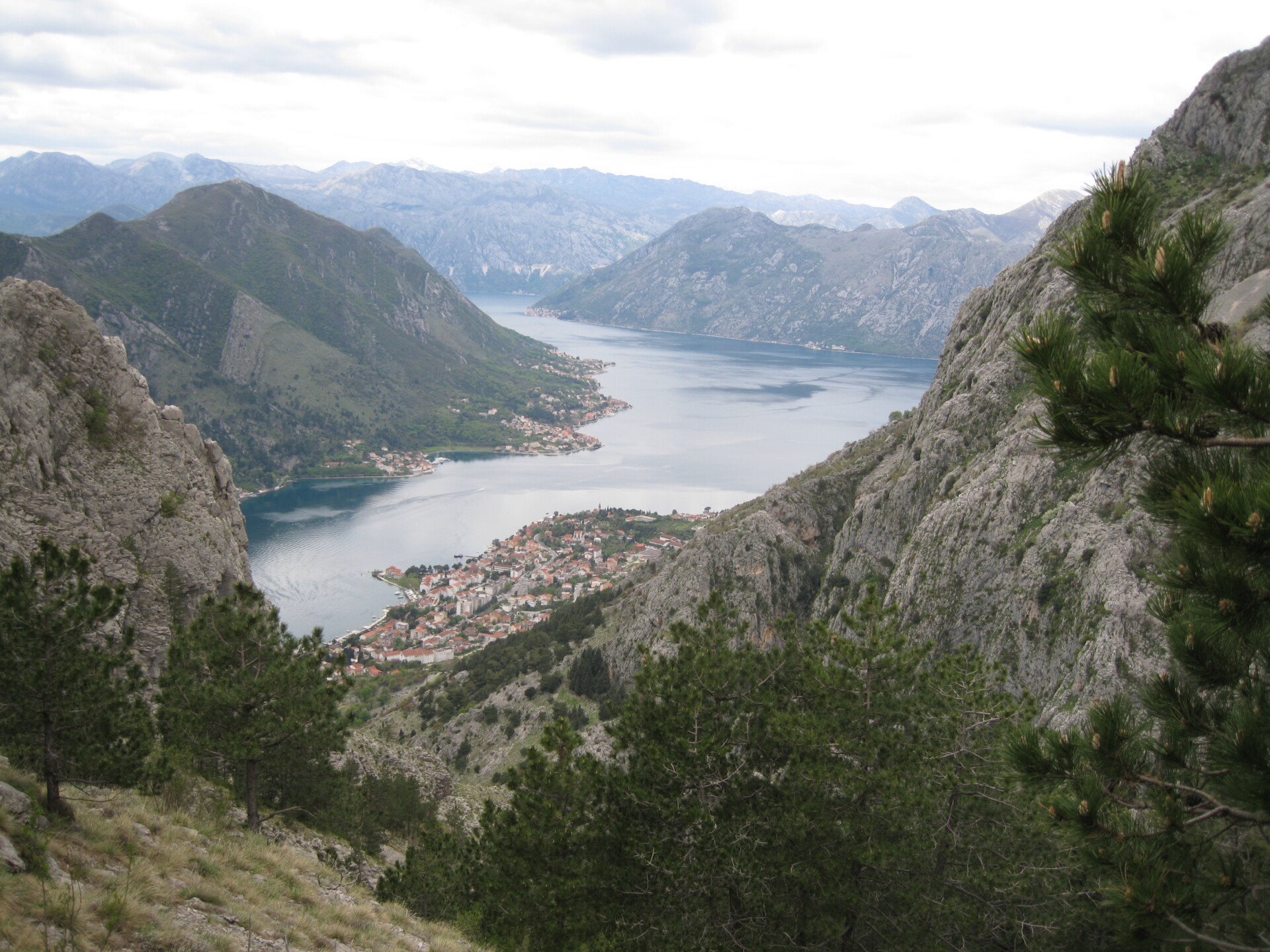
A round tour to Kuk (14 km long, approx. 4 hours, circular route) – The route leads from Ivanova Korita through the village of Velji Botun to the Studenac spring and the Katun Kuk, where some beautiful elements of traditional folk architecture (houses with stone courtyards, thatched barns and gumno) remained intact. From Katun Kuk the route leads to a panoramic view of the Bay of Kotor and then back to Ivanova Korita via Katun Dolovi.
Ivanova Korita – Jezerski Vrh (Mausoleum) (Length 11 km, walking time 3 hours, round trip) – The route leads from the visitor centre in Ivanova Valley via the village of Mali Bostur to the Mausoleum on Jezerski Vrh, with breathtaking views of most of Montenegro, and back via the village of Velji Bostur to Ivanova Korita.
The Wolf Trail (6.8 km long, walking time 1 hr 30 min, round trip) begins at the visitor centre and leads to the Kraljevo rest stop, then on to Katun Kuk (mountain pasture) with panoramic views of Katun Kuk and Ivanova Korita. Along the trail there are karst forms (caves, karst fissures, sinkholes, etc.), beech forests, elements of traditional folk architecture (houses, barns, and preserved foundations). There are beautiful panoramic views of the Budva Riviera and the Bay of Kotor.
Barefoot path
The barefoot trail is located near the visitor centre in Ivanova Korita. It is about 100 meters long. There are a number of fields filled with various natural materials (sand, tree bark, pine cones, gravel, etc.). The visitors gradually get used to the natural surfaces by walking barefoot on softer and then on slightly rougher materials. The soles are gently massaged.
Mountain biking
Exploring the park by bike is a physical challenge, partly because of the many steep climbs in the terrain and partly because of the sometimes rough gravel paths. There are three marked trails for mountain bikers, where you always have to share the paths with hikers as well.
Those who do not have their own bicycle can borrow the necessary equipment at the Ivanova Korita National Park Visitor Center.
We recommend the following cycling routes:
Treteni-ki Vrh and Babina Glava (Length 13 km, travel time 3 hours, round trip) – The route starts at Ivanova Korita, leads through the Katun Dolovi and over Vjetreni Mlini to a panoramic view of Babina Glava (1,474 meters altitude) and a panoramic view of the peak Trestenik (1,489 meters altitude) and back to Ivanova Korita. The elevation differences are relatively small. The entire route follows an old Austrian-Hungarian military road.
Jezerski Vrh/Lake peak (1,657 meters above sea level) – This is a particularly impressive cycling tour to the mausoleum of the Montenegrin prince, bishop and great poet Petar II Petrovic Njegoš. On clear days, from here you can see almost all of Montenegro: the Orjen and Rumija mountains, the Durmitor and Komovi massifs, as well as parts of Albania, Herzegovina and Croatia. On clear winter nights, even the “lights of Italy” can be seen in the distance above the sea from here.
Panorama views
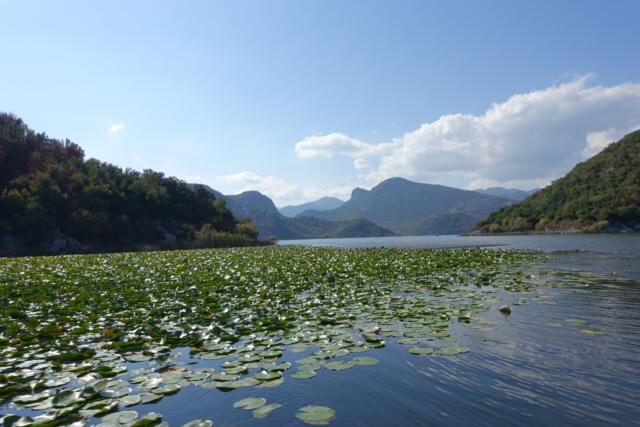
Due to its geographical location, the park is ideal for enjoying the scenery from the numerous viewpoints. On one side, the view sweeps over the Bay of Kotor and the Riviera of Budva; on the other side, over the large basin of Lake Skadar and the so-called ‚Stone Sea‘, a unique karst landscape. The viewpoints are easily reached via marked hiking trails.
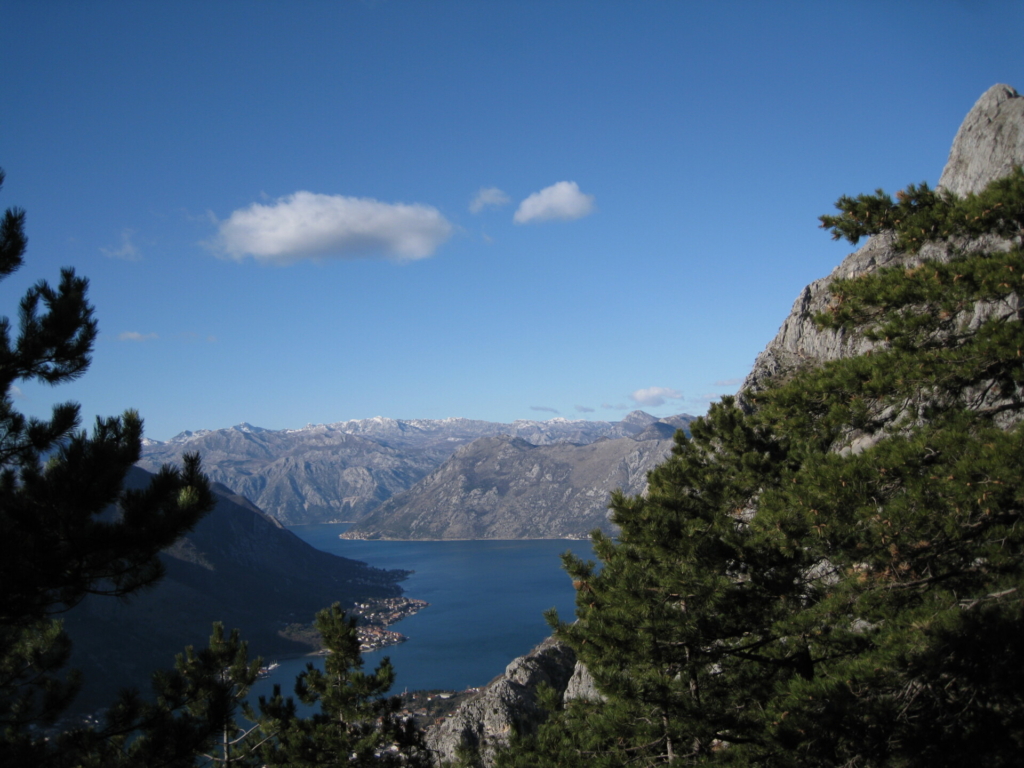
The National Park Administration recommends the following panoramic views:
Summit of Trestenik (1,474 m altitude), from where you can see Ivanova Korita, the peaks of Babljak, Štirovnik and Jezerski Vrh/Lake Peak, Cetinje, Skadar Lake and Podgorica.
Kuk (1,240 m altitude) „The most beautiful meeting of land and sea”, as once written by the English poet Lord Byron. One can experience this meeting for oneself when one looks out from this panoramic view of the foothills of the mountain massif and the bay of Kotor.
Jezerski Vrh/Lake Peak (1,657 meters above sea level) – Here is the mausoleum of the Montenegrin prince, bishop and poet Petar II. Petrovic Njegoš. On clear days you can see almost all of Montenegro from here: the Orjen and Rumija mountains, the Durmitor and Komovi massifs, as well as parts of Albania, Herzegovina and Croatia. On clear winter nights, even the “lights of Italy” can be seen in the distance above the sea from here.
Reading forest
Near the visitor centre there is a reading forest with hammocks and provided books. With a good book in hand, park visitors can relax in the shade of a cool beech forest and enjoy nature.