
Durmitor National Park
The Durmitor National Park is, if you will, the star among the five national parks in Montenegro. It was established in 1952 and is the only national park in Montenegro that is known beyond the borders of the countries that were once part of Yugoslavia. With an area of approximately 33,200 hectares, it is the second largest park in Montenegro after the Skadar Lake National Park. Its popularity is also reflected in the relatively large number of visitors. With around 140,000 visitors per year (2023), most of whom come during the summer months, the park is by far the most visited national park in Montenegro. The municipality of Žabljak is the most popular access point to the park. This is because here is the main entrance and the visitor centre with its permanent exhibition on flora and fauna in the park. In the associated information office, you can get all the necessary information, hiking tips and safety instructions, as well as of course hiking maps and souvenirs. Smaller access to the park is also available from the municipalities of Mojkovac, Šavnik, Pljevlja and Plužine.
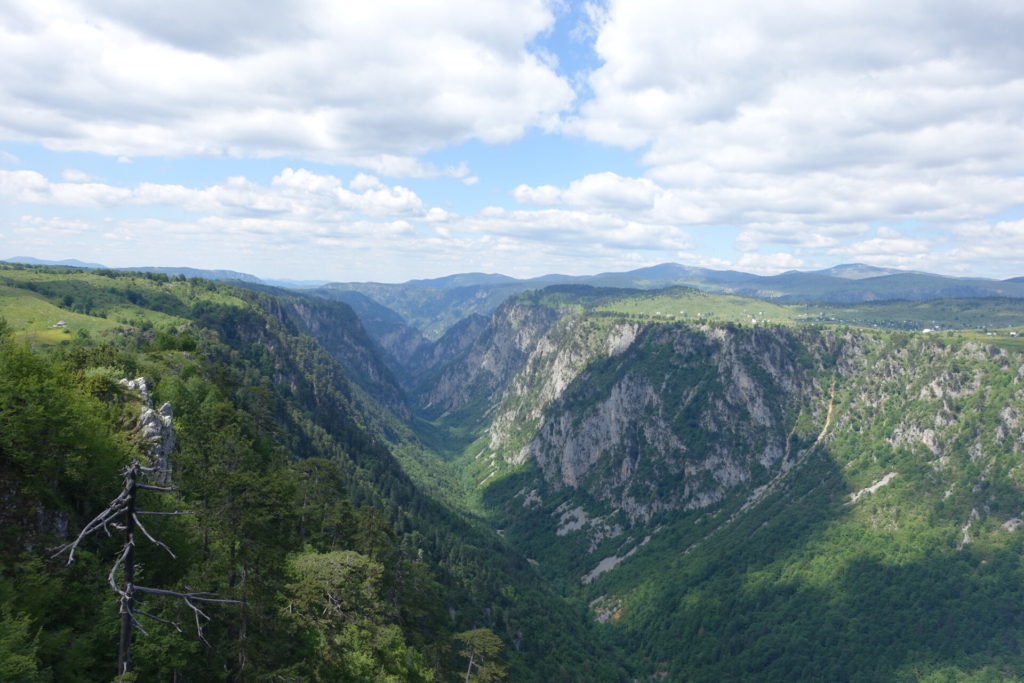
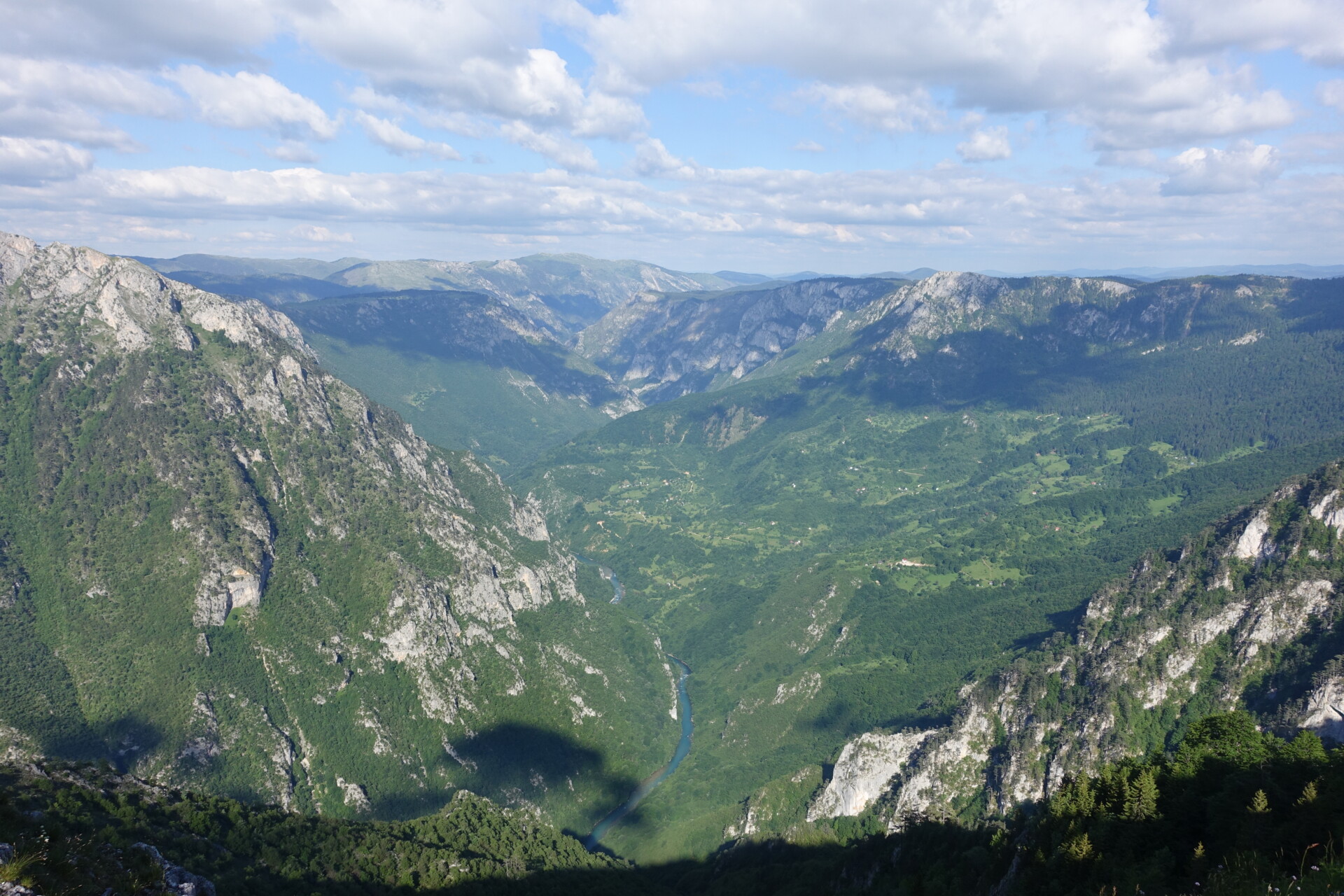
The park can be roughly divided into two very different parts: there is the rugged, towering Durmitor mountain massif on the one hand, and on the other hand the wild canyon of the Tara, which has formed the deepest canyon in Europe. Furthermore, the canyons of the Draga and Sušica, as well as the upper part of the valley of the Komarnica Canyon, belong to the national park.
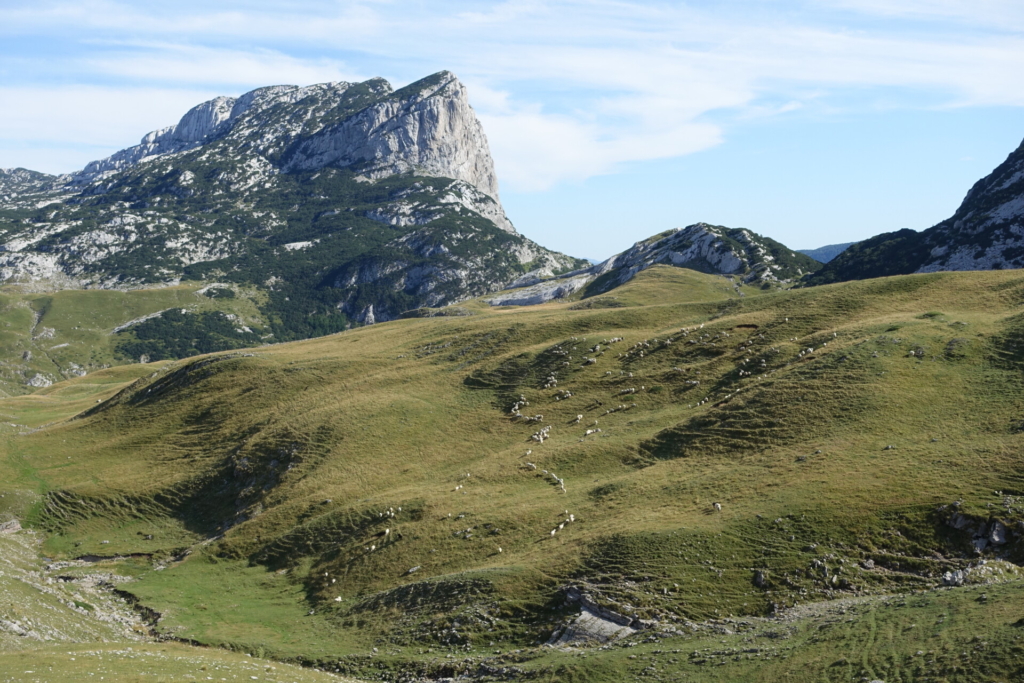
The Durmitor massif is formed by numerous mountain peaks, eight of which have an altitude of more than 2,000 m. The highest peak and at the same time the highest mountain of Montenegro is Bobotov Kuk, located in the middle of the Durmitor National Park, with an altitude of 2,525 m.
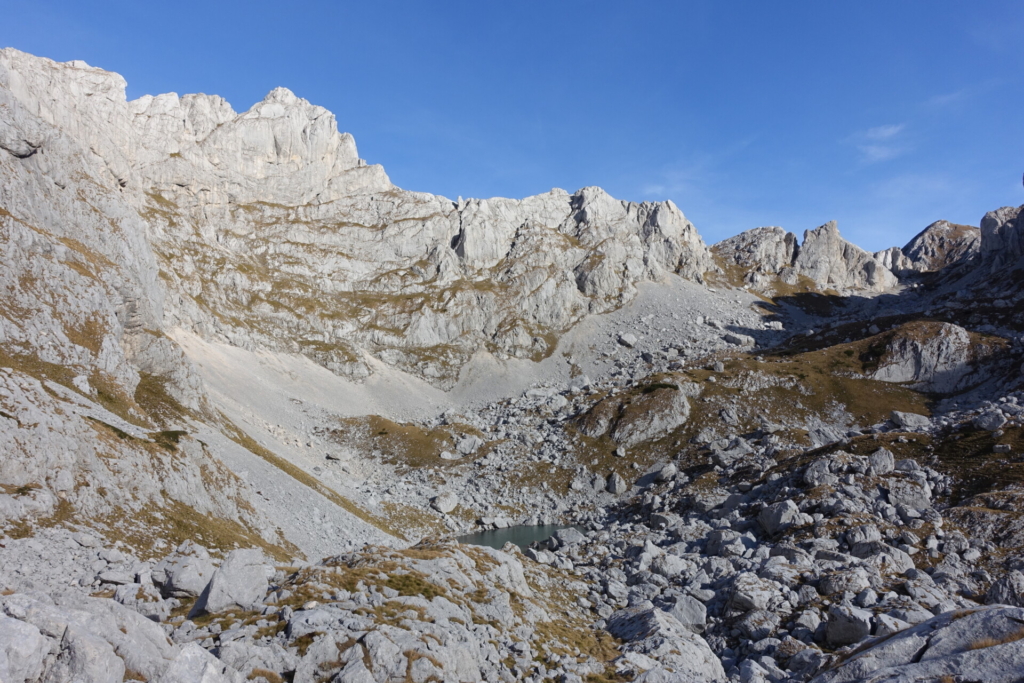
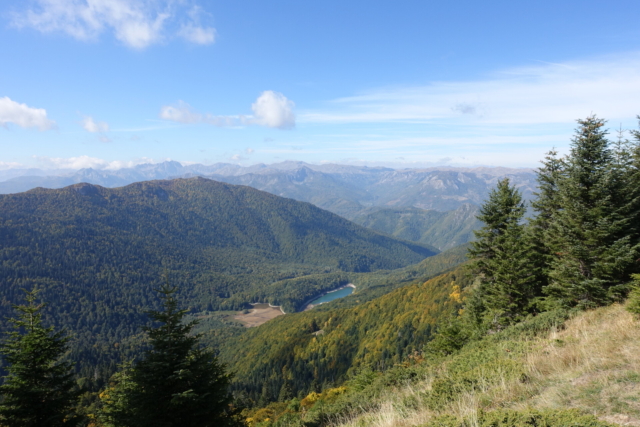
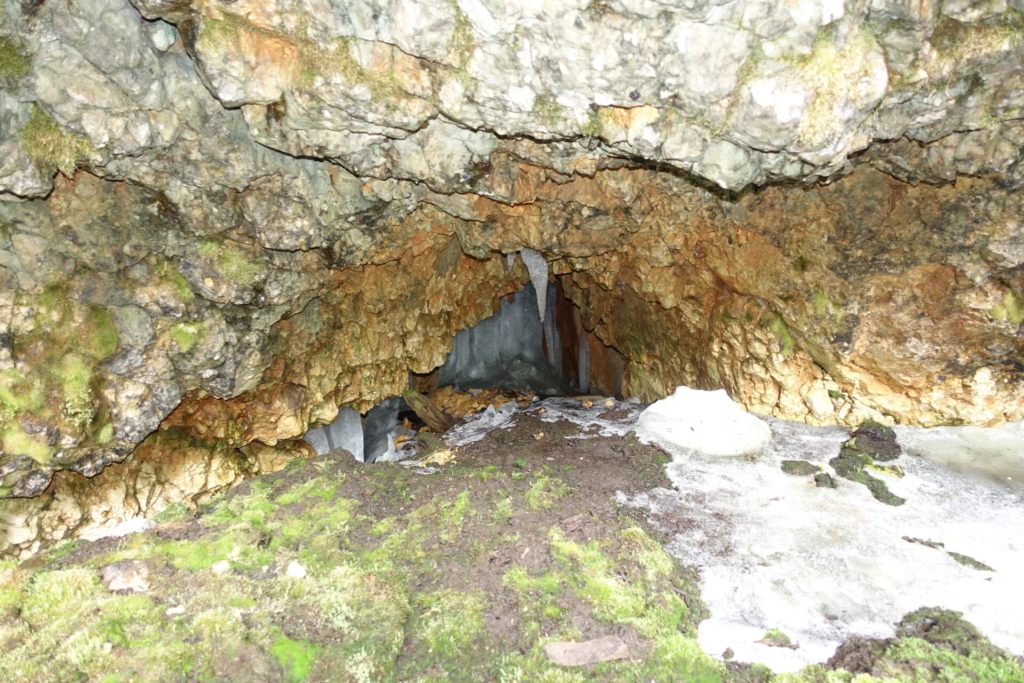
Within the national park boundaries there are 18 glacier lakes, so-called “mountain eyes”, a legacy from the last ice age.
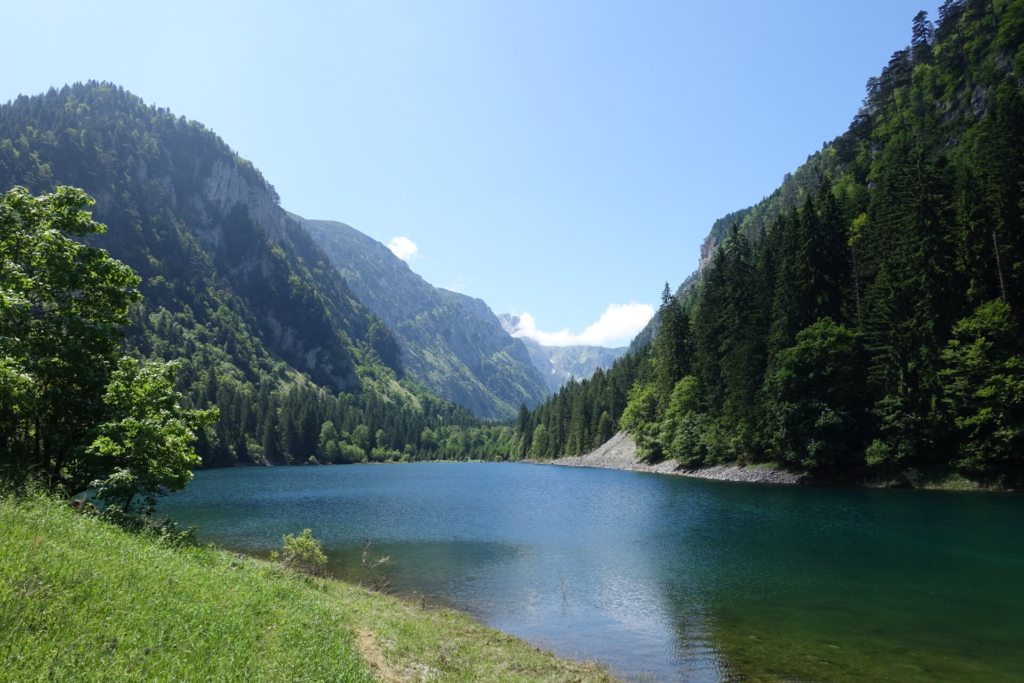
The flora and fauna of the park are extremely diverse with numerous endemic species and relics. Due to the millennia-long settlement of this region, one also finds surprisingly many cultural features within the park boundaries, such as necropolises, Greek and Roman cemeteries, churches and monasteries, steccis (medieval Bogumil stone tombs), as well as typical local alpine huts/katuns, savardak (huts shaped like haystacks) and remains of former watermills.
The Tara, at 145 km the longest river in Montenegro, with the deepest canyon in Europe (1,333 m), is geomorphologically, hydrogeographically and biogeographically unique. Due to its special nature, purity and exceptional beauty, it was included in the UNESCO Man and the Biosphere (MAB) list in 1977.
The Durmitor National Park has been designated a UNESCO World Natural Heritage Site since 1980. The medieval Bogomil tombstones (Stecci) just outside the park boundary near Riblje Lake (near Novakovići) and the Stecci in the village of Bare Žugića have been protected by UNESCO since 2017.
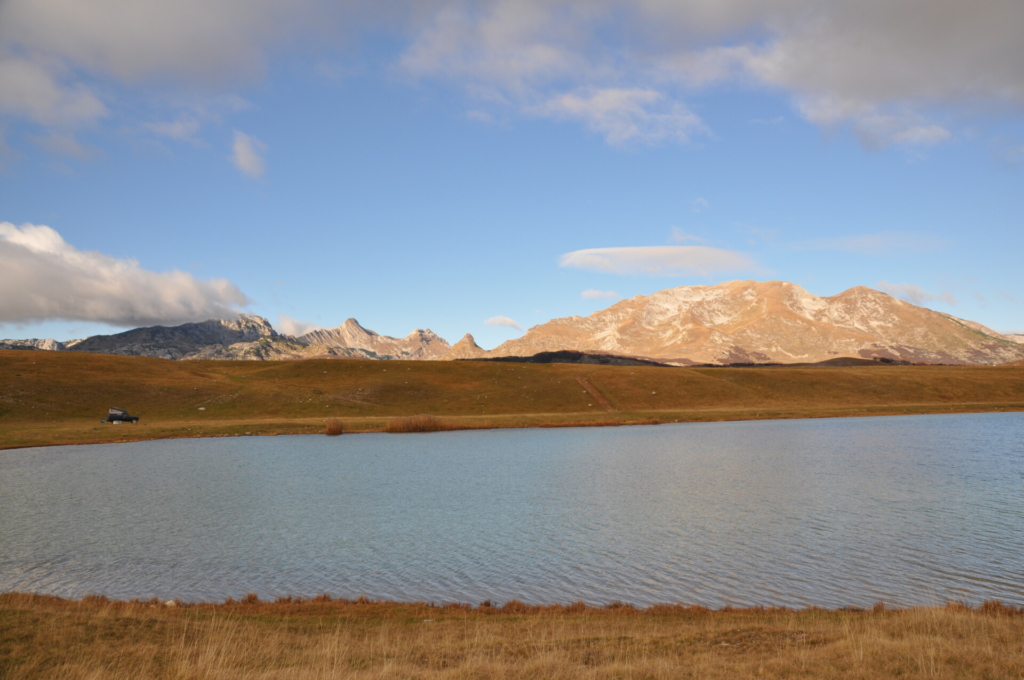
The following natural treasures within the park are particularly noteworthy:
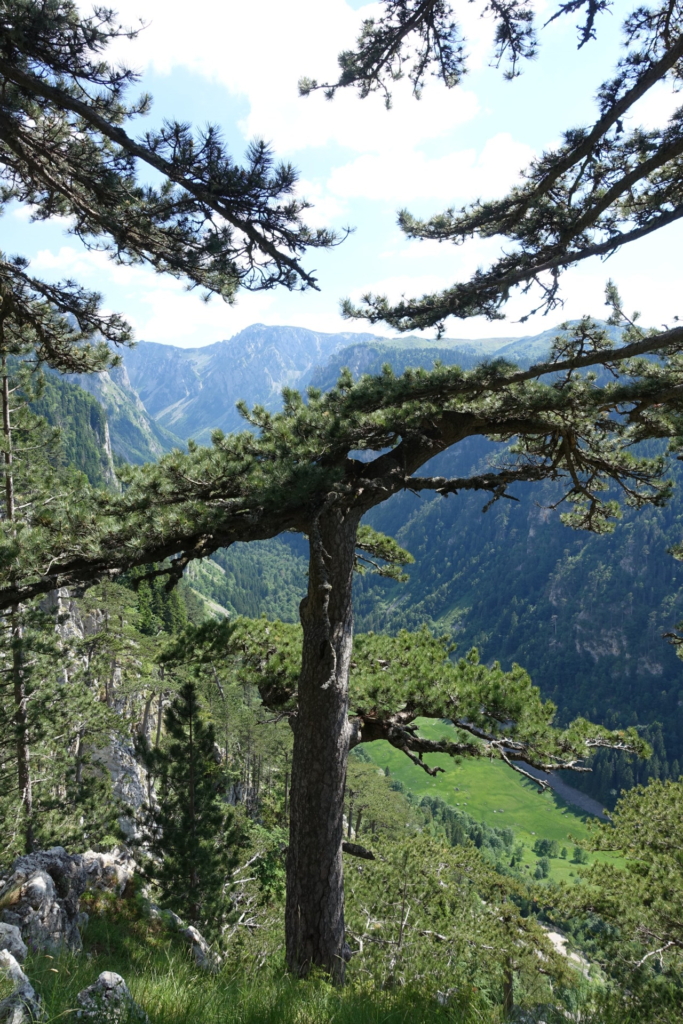
- Crna Poda (Black Pine)
- Škrčka Lake and the walls of the Sušica Canyon
- Barno Lake and its immediate surroundings
- Zabojsko Lake and its immediate surroundings
- Mlinski potok/Mlinski Stream
- Tara Canyon
Nature
Flora and vegetation
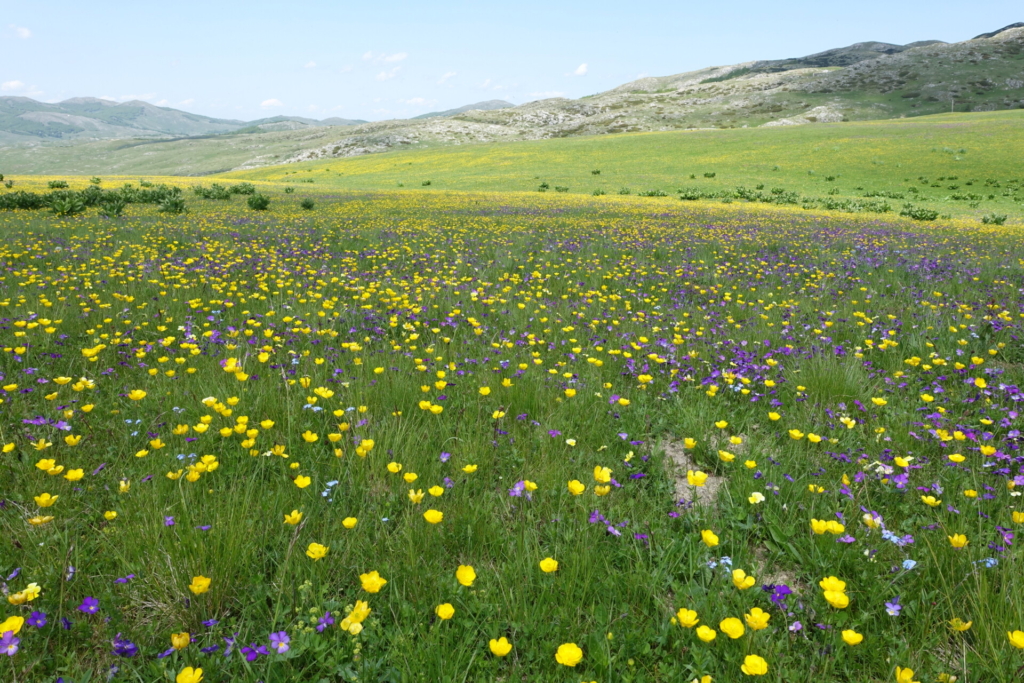
The Durmitor massif is an important centre of typical Balkan flora, with representatives of alpine and alpine-arctic flora. On the southern slopes, especially in the canyon valleys, you find sub-Mediterranean and Mediterranean plant species, while the marshy areas of some lakes represent enclaves for species characteristic of the Siberian taiga.
Numerous different plant communities in forest ecosystems, on mountain meadows and pastures, in rocky cliffs and areas, as well as freshwater ecosystems form the vegetation cover in the park.
The forests cover 34.5 % of the total area of the National Park. One of the natural features is the black pine forest in Crna Poda, where beautiful trees grow up to a height of 50m and are up to 450 years old.
Of the 1,325 plant species recorded so far in the Durmitor flora and the surrounding canyons, 898 belong to the high-mountain flora (at altitudes above 1,500 m). Of these, 122 are endemic, meaning they occur only here. Three-quarters of these endemics are attributed to the high-mountain flora.
Among the rich and diverse flora of the National Park, the following endemic and/or very rare species should be particularly highlighted: Cerastium dinaricum (Dinaric mouse-ear chickweed), Travnatolisna mišjakinja, great yellow gentian, Verbascum durmitoreum (Durmitor mullein), Nikolai violet (a violet species), Pinguicula balcanica (a carnivorous butterwort), Euphorbia montenegrina (a spurge), Moltkia, Viola calcarata (long-spurred pansy), Daphne blagayana Freyer (royal daphne), etc.
Fauna
According to ecological-biogeographic classification, the Durmitor massif belongs to the mountain region of the northern Dinarides, which is also clearly reflected in the structure of the animal life. In addition to the geographical factor, the diversity of the fauna was influenced by orographic, climatic, historical and anthropogenic factors, with some endemic species and relics from the Pleistocene (the last ice ages) and even the Tertiary period being present. The animals of the Durmitor massif belong partly to the mountain and partly to the high mountain fauna, but also species that do not belong to mountain ecosystems but to plains or even to the Mediterranean fauna are present in some cases.
The invertebrates rank first in terms of diversity and uniqueness among animal species, with a large number of relics and endemic species, especially among insects. Six species are under direct protection: the swallowtail, the scarce swallowtail, the Apollo butterfly, the European rhinoceros beetle, the stag beetle and the wood ant.
Brown trout, grayling, huchen, Arctic char, bullhead, European bitterling and a species of newt, which is a postglacial relic and is under strict protection, can be found in the rivers and lakes of the region.
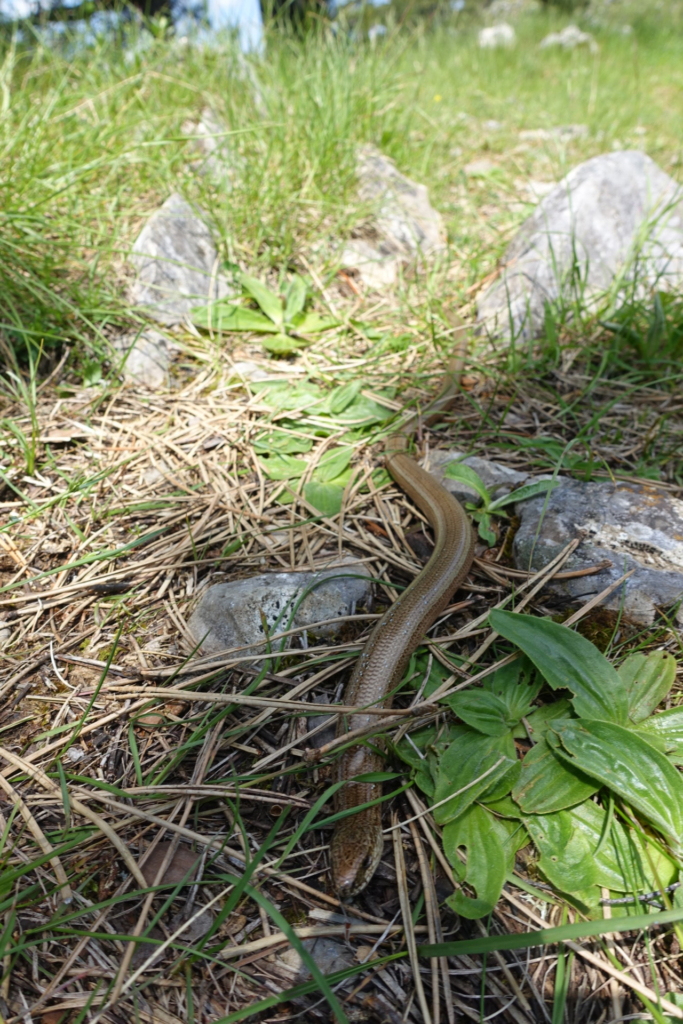
Representatives of the herpetofauna (amphibians and reptiles) include the adder, the nose-horned viper, the sharp-snouted rock lizard, the European pond turtle, the Alpine newt, the fire salamander, the Greek stream frog, etc.
In the Durmitor area there are 168 bird species, some of which are quite rare, e.g. capercaillie, golden eagle, griffon vulture, kestrel, little owl, woodpecker, etc.
The mammals that live in the park are bears, chamois, roe deer, wolves, wild boars, rabbits, foxes, martens, dormice and many more. The animals are very shy, which is why they are unfortunately very rarely seen. This also applies to the otter as a semi-aquatic mammal that lives in the rivers Tara and Sušica.
Culture
The rich cultural and historical heritage in the Durmitor National Park can be traced back from today to the earliest prehistoric periods. As notable remains of prehistoric times, several Illyrian burial mounds can still be found. The Roman rule also left traces in parts of the National Park, such as the Cipus (a stone in the shape of a thumb), several Roman stone bridges and remains of Roman caravan roads.
The Middle Ages are represented by necropolises with Bogomil tombstones (Stecci), ruins of Turkish bridges, remains of watchtowers along the former Montenegrin-Turkish border, as well as ruins of the old fortress Pirlitor above Lever. The three monasteries in the Tara Valley, Dobrilovina, Dovoljii and Đurđević Tara date from the fifteenth to the seventeenth centuries.
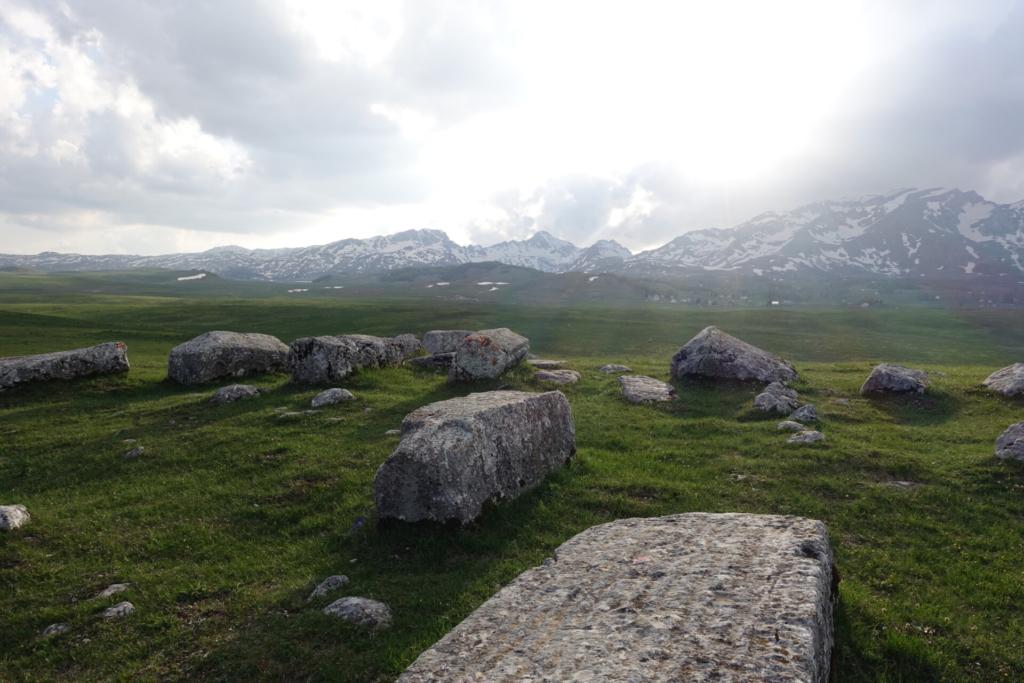
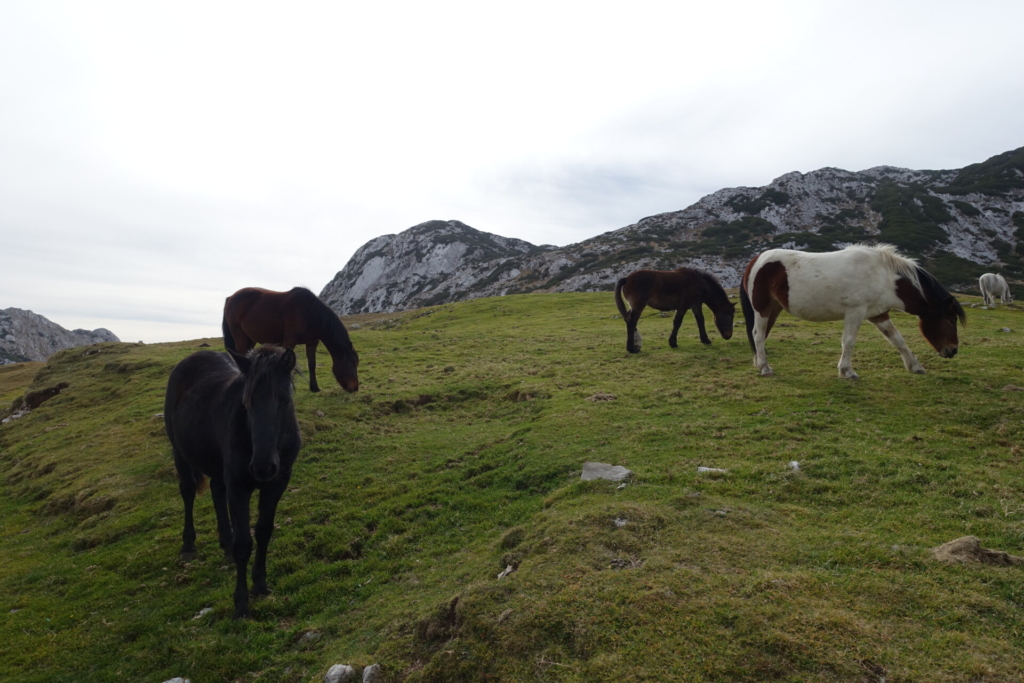
In the Durmitor area there are several still-managed pastures called katuns. Grazing by the herders' livestock is particularly important for parts of the park because it prevents scrub encroachment. The inhabitants of the katuns are largely self-sufficient. Their locally produced products, especially cheese, sausage, bacon and honey, are sometimes offered for sale to tourists.
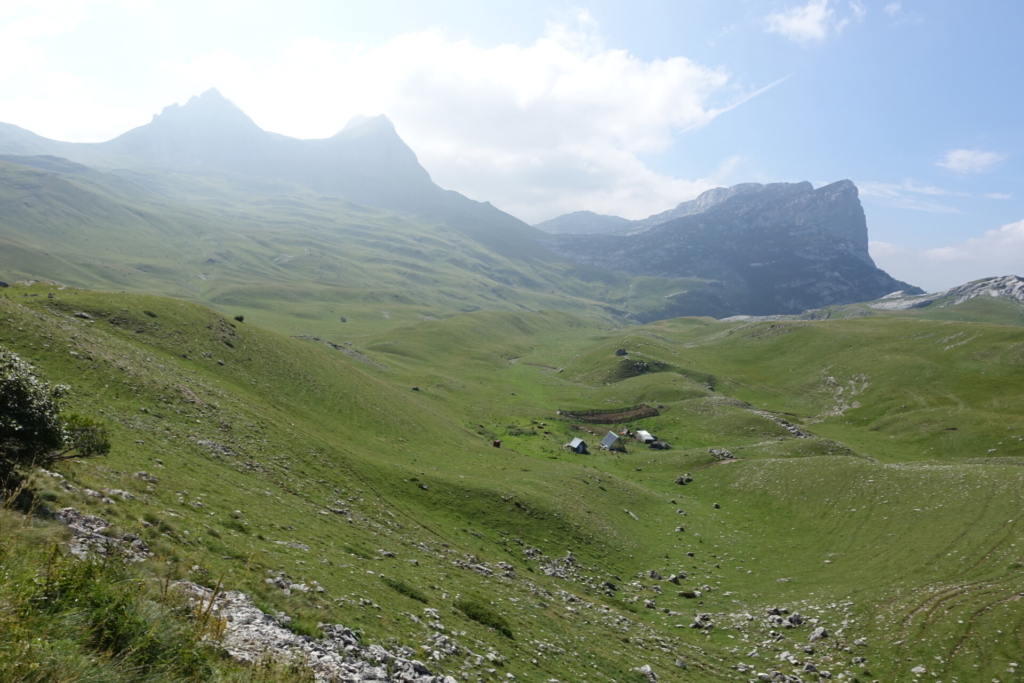
Of particular importance is the folk spiritual tradition of this region, which is expressed through legends, special traditions, anecdotes and sayings, poetry and partisan songs. These centuries-old traditions were particularly inspired by the vast, at times mystically-charged nature of Durmitor, historical events and the extraordinary personalities in the Durmitor region.
Tourism
Staying in the Durmitor National Park offers many opportunities for an active, nature-oriented holiday. Hiking, cycling, kayaking, rafting, or meditating in one of the ancient forests of the Durmitor National Park are just some of the possible activities. In addition to the beautiful natural scenery, the cultural and historical heritage of the region complements the park's tourist offerings.
Visitor centres
Near Black Lake/Crno Jezero there are two visitor centres from which one can explore the park. In both centres, visitors can find information about the natural treasures and cultural features of the park, as well as many information about possible outdoor activities.
The visitor centre, located in the administrative building of the national park, displays a natural history collection, many examples of the insect fauna, as well as exhibits of the most famous mammals and bird species of the Durmitor area.
The second visitor centre, located directly on the trail around the Black Lake, is dedicated primarily to the park's tourist activities. A fully equipped museum room showcases the traditional way of life of the residents of the Durmitor region. This visitor centre is open only during the main season.
In both visitor centres, you can purchase souvenirs, maps, and travel guides.
Opening hours of the visitor centre at the main entrance:
- During the summer season daily from 9:00 to 17:00
- Outside the summer season, weekdays from 8:00 to 16:00
Hiking
The park area is accessible via a network of marked hiking trails with a total length of approximately 150 km.
The following hiking trails are recommended by the National Park Administration:
The nature trail around Black Lake (approximately 4 km long, 1.5 hours, round trip) is one of the most visited and most well-known hiking trails in the park. The trail leads around the shore of Black Lake, through a fir and spruce forest, and is equipped with information panels and several benches for resting.
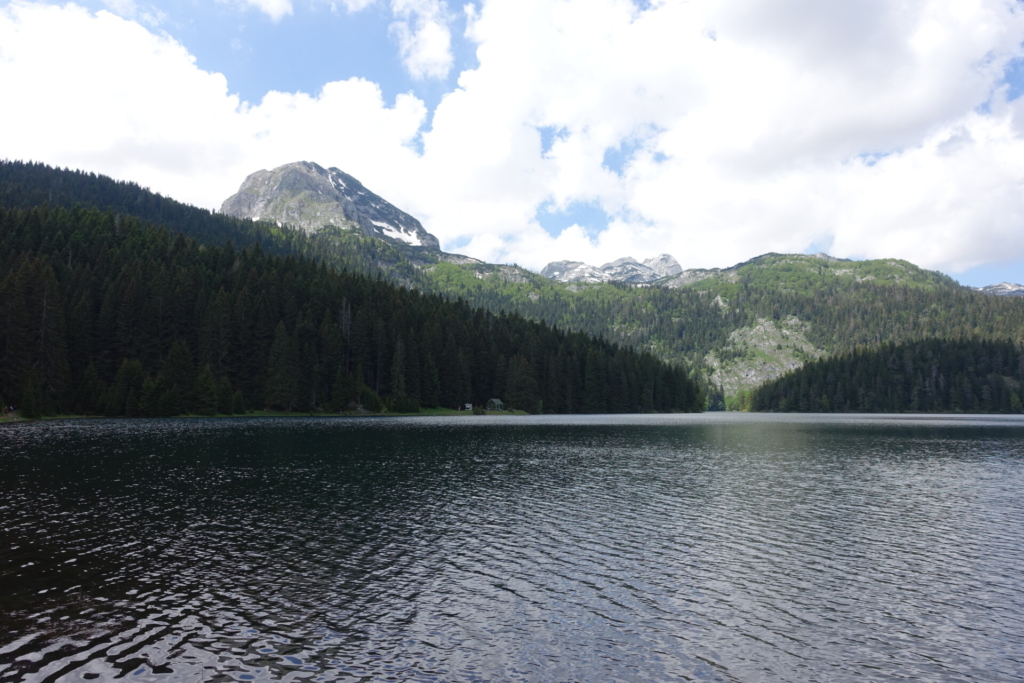
Black Lake – Mlinski Stream/Mlinski Brook (4.6 km long, walking time 1 h and 30 min, easy) – The path leads from Black Lake through the Mlinski Stream/Mlinski Brook forest reserve, along the stream where several former mills stand.
Dobri do (Šarba spring) – Škrčko ždrijelo/Škrčko Gorge – Prutaš summit – Škrčka lakes (length approx. 14 km, hiking time 4 hours easy) – The trail connects the Katuns Dobri Do and Ivan Glavica/Ivan Cap with panoramic views of the Škrčko gorge (elevation 2,114 m) and the Prutaš summit (elevation 2,393 m), and leads along the two glacial lakes, Great and Little Škrčko Lake.
Black Lake – Jaksic mill/Jaksic mill – Bosača – Jablan pond/Jablan Pond – Red Rock/Crvena greda (Length approx. 12 km, walking time 3.5 hours, easy) – The path begins at Black Lake and offers many scenic highlights. It leads past the remains of old mills, the Katun Jablan Bara/Jablan pond and the beautiful Barno Lake. It ends at Red Rock/Crvena greda (2,164 m).
Mountain biking
The Durmitor National Park offers good conditions for cycling and pedelec riding as well as mountain biking. Depending on your physical fitness, experience, and interest, there are individual signposted trails of varying difficulty levels.
The National Park Administration recommends the following cycling routes:
The famous Durmitor Ring (length 86 km, travel time 9–10 h, circular route) is one of the most beautiful, most varied, but also one of the most strenuous circular routes for touring cyclists, pedelecs, mountain bikers and racing cyclists in the park. The route leads from Žabljak, down through some villages into the canyon of the Sušica River and back up along Katuns and mountain peaks to Savin kuk and back to Žabljak. The Durmitor Ring has now been completely paved and is therefore also suitable for racing bicycles.
Žabljak – Njegovuđe – Pond of Žugić/Bare Žugića – Vražje jezero/Devil's Lake – Banske kuće/Banska houses – Javorje (Length 38 km, travel time 2 hours, circular route) – The path leads through coniferous forests, over meadows and through typical Durmitor villages. Special sights along the route are the glacier lakes Riblje/Fish Lake and Vraje jezero/Devil Lake and the medieval tombstones (Stecci) near the villages Bare Žugić and Riblje.
Žabljak – Ivan do/Ivan Valley – Mlinski potok/Mlinski Stream – Zminje Lake (Length 5.2 km, travel time 1-2 hours, easy) – The path leads through a beautiful, cool coniferous forest, along the Mlinski Potok/Mlinski Stream forest reserve to Zminje Lake/Snake Lake.
By car, camper van or motorcycle
The Durmitor Ring Panoramic Route
Despite its seemingly short length, the Durmitor Ring is one of the most impressive panoramic routes in the region. The route leads through breathtakingly beautiful regions in the north of Montenegro that are largely untouched by humans. It connects the municipality of Žabljak, the ski resort Štuoc, the Sušica gorge of the eponymous river, the village of Nedajno, the Piva mountain range, the village of Trsa, the glacier lakes Valovito, Modro and Pošćensko, the distinctive mountain peaks Prutaš and Sedlo, Jezerska visoravan and the ski resort Savin kuk and then returns to Žabljak.
The round trip is 76 km long (83 km if you visit the panoramic view from Ćurevac) and leads through the Durmitor National Park and the Piva Nature Park.
Despite the apparent ‚shortness‘ of just under 80 kilometers, one should plan at least a full day for the extremely varied tour. Organized one-day and multi-day tours are also offered.
Further information about the Durmitor Ring and the highly recommended audio guide can be found at: On the panoramic roads through Montenegro
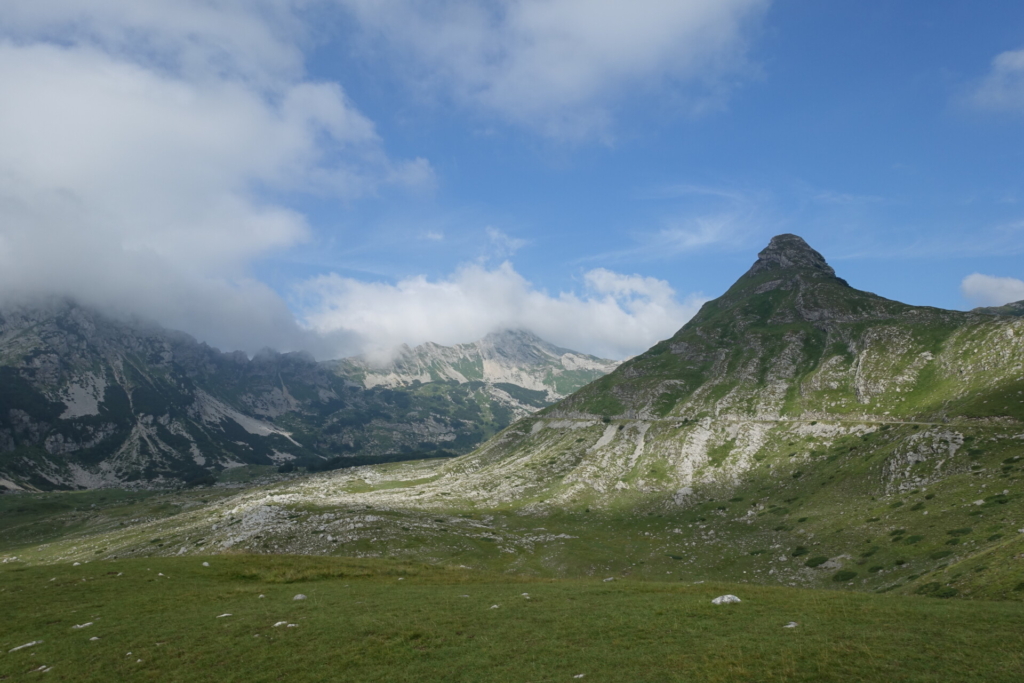
Especially interesting viewpoints
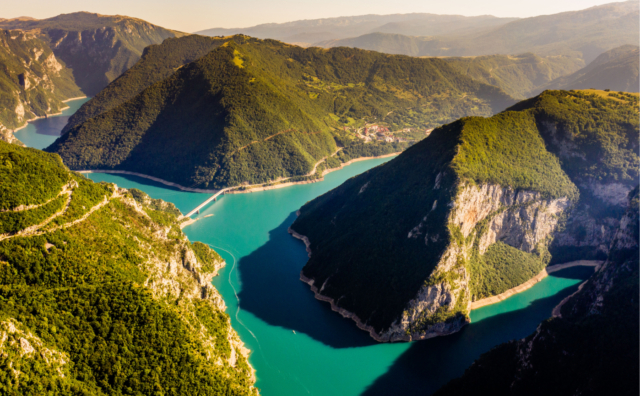
There are numerous viewpoints in the Durmitor massif that offer breathtaking panoramic views overlooking the deep canyons of the Tara and Sušica rivers, glacial lakes, natural forests, vast pastures and the majestic towering peaks of the Durmitor massif.
Particularly recommended among them are:
Curevac (1,625 m altitude) – below which the Tara has cut its deepest gorge (1,333 m). From here, you can see many kilometers of the Tara Canyon as well as the small village of Tepca.
Sedlana greda/Saddle Ridge summit (2,227m altitude) – known as the Sedlo bogova/Gods' Saddle for its beauty and special appearance – from here you can see the Modro and Valovito lakes as well as the “Šareni pasovi/Colorful Layers” and Šljeme mountain peaks.
Village Nedajno (1,480 m altitude) – From here you have a breathtaking view of the Sušica Canyon and the small village of Mala Crna Gora/Small Montenegro, which is still inhabited all year round, as well as some particularly beautiful mountain pastures.
Rafting
The most spectacular outdoor activity in the Durmitor National Park is rafting on the Tara River. Getting down this river on rafting boats is an unforgettable adventure, especially in spring and early summer when the water level of the Tara River is still high. There are various rafting tours of one to three days’ duration offered by professional providers.
Here are three examples of different lengths:
Splavište (camp II) – Žugić port (length 14 km, rafting time 3-4 hours, day tour) – The main attractions of this tour are the mouth of the Ljutica river and the Đurđević Tara bridge.
Splavište (camp II) – Žugić port – Radovan port (length 24 km, rafting time 5-6 hours, one- or two-day tour) – The main attractions of this tour are: the narrow passages of Trešnjak, the monastery of the Archangel Michael, the canyon passages (Archangel narrow passages), Neviđen and Zeleni vrhovi/Green Peaks, the Mušova and Bijela springs, the narrow passages of Crna ploča/Black Table, Obodina, Lazin kamen/rock, Sige (Bobovske) and the Draga river mouth.
Splavište (camp II) – Žugić port – Radovan port – Brštanovica – Šćepan field (Length 60 km, rafting time 10-11 h, two- or three-day tour) – The main attractions here are: Tepački narrow passages, Bajlović Sige, the mouth of the Sušica river, Jovovic Sig as well as numerous streams and springs: Skakavac, Brasanovic, Varda, Ćelije and Mladac, Uzlup, and Mahnito.
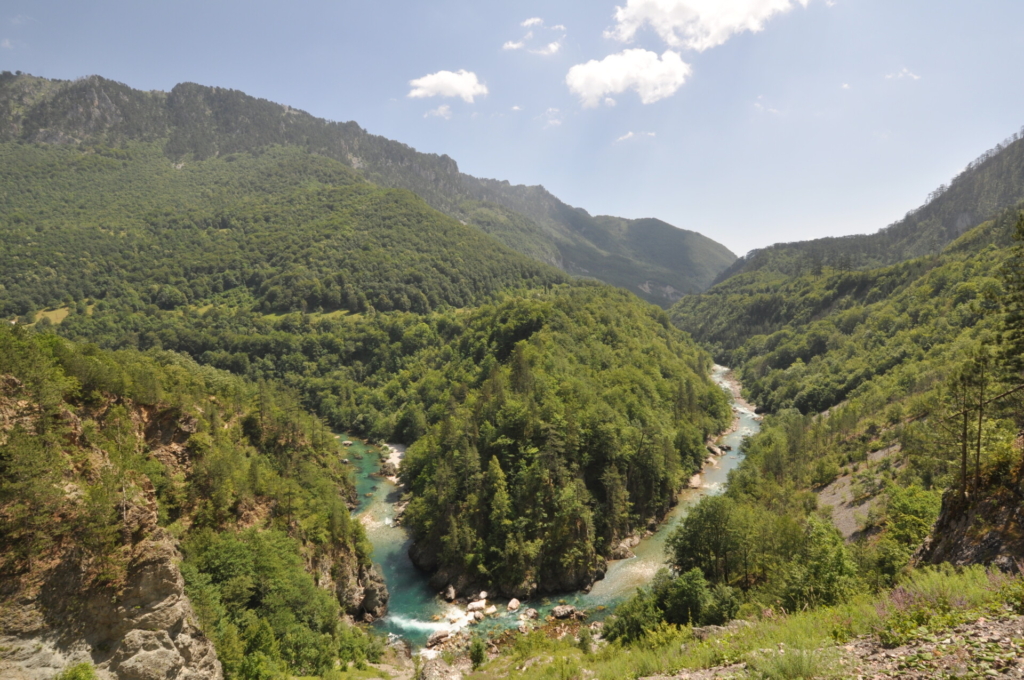
Kayaking on the Tara
Kayaking is allowed in some parts of the Tara River, but especially at higher water levels in spring and early summer it is only recommended for real experts. Unlike rafters, kayakers have the opportunity to experience the natural beauty and magic of the canyon alone or in a small group. Of course, there is also the option to participate in an organized kayaking tour or to book a personal, knowledgeable guide for your own tour. Packrafting is also possible. Especially the summer months are recommended when the water level is low.
Three typical tours on the Tara are:
Bistrica – Kulina – Raft (Camp II) (Length 20 km, kayaking time 3-4 hours, difficulty level III-V) – The attractions of this tour are the Crna poda black pine rainforest, the Devil’s Valley – large rocks standing in the river, narrow river bends and the natural beauty of the canyon itself. Between Kulina and Splavište and Strugs, the water level in summer is often so low that the kayaks have to be towed along the bank for a short distance (about 15 meters).
Raft (Camp II) – Radovan Port (Length 25 km, kayaking time 4-5 h, difficulty level I-III) – The special sights of the tour are: Trešnjak Gorge, the monastery of the Archangel Michael, the Archangel Gorge (Archangel narrow passages), Neviđen and Zeleni vrh/Green peaks, the Mušova and Bijela/White springs, the Crna ploča/Black Table gorges, Obodina, Lazin kamen/rock, Sige (Bobovske) and the confluence of the Draga into the Tara river.
Radovan port – Brštanovica (length 25 km, kayaking time 5-6 h, difficulty level I-III) – The attractions here are: the Đurasica narrows, the Tepački narrows, the Siljevak narrows, the Lizavica narrows, Bajlović sige, the Zamosten narrows, as well as the confluence of the Sušica river
Boating and kayaking on the Black Lake
Rowing and kayaking on one of Montenegro’s most beautiful lakes – the Black Lake – is organized from the National Park. The coniferous forest that surrounds the lake and the mountain peaks of Međed/Bear, Savin kuk and Crvena greda/Red Rock are the backdrop for a leisurely boat tour with rental rowing boats or canoes. The lake is located at an altitude of 1,416 m and consists of two smaller lakes that are connected by a narrow stream.
Boats and kayaks can be rented at the visitor centre on Black Lake.
Reading forest
Near the visitor centre, on the shore of the Black Lake, there is a reading forest equipped with hammocks and bookshelves. With a good book in hand, visitors can fully enjoy nature in the shade of the coniferous forest.
Fishing
Fishing for leisure purposes is permitted in the Black Lake and in the Tara Canyon from May to October with a fishing license. The license is available at the park administration building or locally from the ranger in charge. Fishing is only allowed on certain days and at certain locations using a fishing rod and with artificial bait. The most common species that can be caught are trout, Arctic char and grayling. We recommend that the caught fish be returned to the river or the lake (catch and release). Please ask the relevant ranger about the rules that change annually and follow them.
Snowshoe hiking
Savin Kuk Ski Center – Black Lake (Length 6.7 km, walking time 2 hours, easy) – The route for snowshoe hiking starts at the Savin Kuk Ski Center. The path leads through a spruce and fir forest, constantly gently up and down to the Black Lake. It is especially marked with “snowshoe markings” and is suitable for users of all ages. This snowshoe hiking route is an exciting winter experience in a national park that is almost completely deserted during the winter season.
Snowshoes can be borrowed at the visitor centre, which is located in the administrative building at the main entrance of the national park in Zabliak.
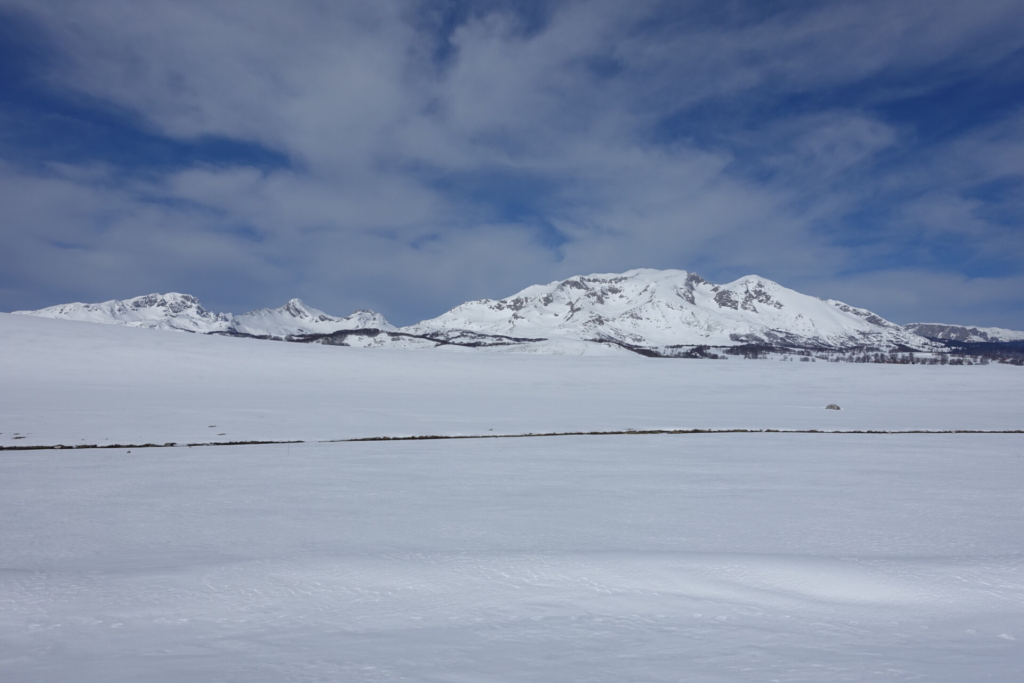
Warning! Durmitor is notorious for its extreme weather changes in a very short time, as well as rapidly developing strong thunderstorms during the summer season. There are only a few shelters in the park. Although the hiking trails are marked, it still happens every year that hikers get lost during extreme weather conditions. Good equipment with suitable footwear and map material, as well as the ability to read them, are absolutely necessary. In many (but not all) parts of the park, there is mobile phone reception, which is only useful if the phone battery is charged.
There is a very dedicated mountain rescue team made up entirely of part-time volunteers, but its capacity should not be overestimated.