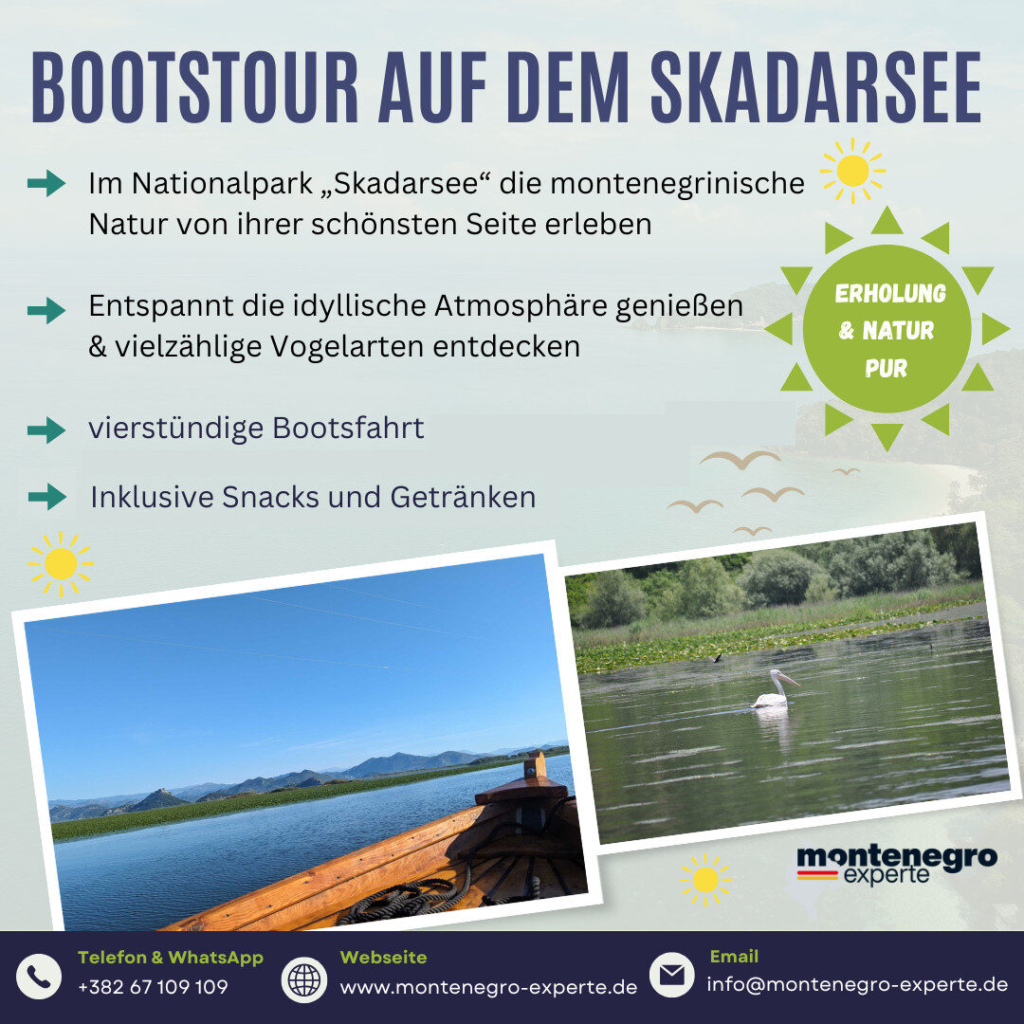


Largest lake in the Balkan Peninsula
Lake Skadar (also: Lake Scutari) is located in an area that was declared a national park in 1983. The lake is 48 km long, 14 km wide and is located approximately 2/3 in Montenegro and approximately 1/3 in Albania. It is located only 20 km from the Montenegro holiday apartments in Utjeha and is therefore easily accessible.
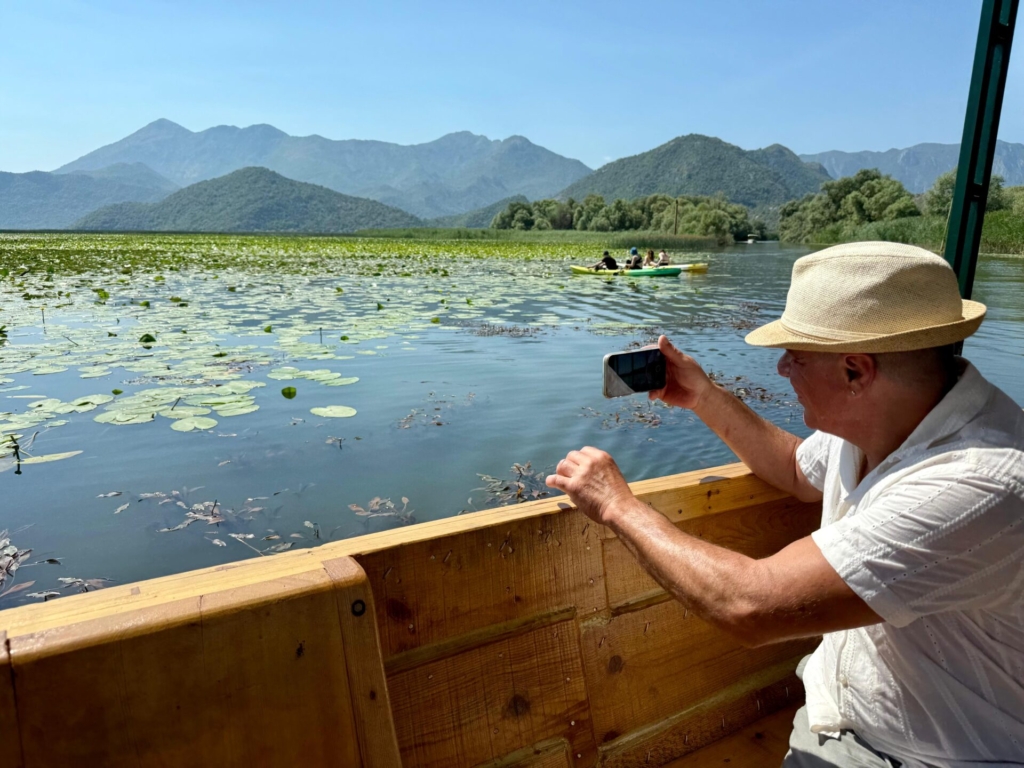
Over 20 endemic animal and plant species are native to this area and about 280 bird species live here. One of them is the rare Dalmatian pelican, which has become the symbol of the national park.
The shore of the lake is characterized by ancient towns with historical city centres and special architecture. Virpazar and Rijeka Crnojevića are settlements where traditional food is served. The hinterland is known for its wine, which is considered the best in Montenegro.
Discover the entire beauty and unique nature on a boat trip on Lake Skadar. The tour lasts approximately 4 hours. During this time, you have the opportunity to admire the cultural and historical heritage of the region and to treat your palate to regional dishes.
A boat tour through the “Skadar Lake” nature park is an ideal excursion even for families with children.


Details about the boat tour
- Dates: Weekly from April to November
- Start: by agreement
- Duration: 4h
- Participants: min. 4 people
We always post the current dates in our WhatsApp and Facebook groups in a timely manner. You can sign up here: Free information service via WhatsApp & Facebook
Outdoor activities can involve certain risks. We recommend taking out travel insurance.
The island “Grmožur”
Grmožur is an island and castle ruin in Lake Skadar. The fortress was originally built by the Turks, but was conquered by the Montenegrins a few years later.
Shortly thereafter, it was converted into a prison. Here, King Nikola I imprisoned political opponents – mainly non-swimmers. Therefore, the island is also known among the locals as “Montenegrin Alcatraz”.
Today, the island, as well as the entire Skadar Lake, is an important breeding ground for native sea birds. Migratory birds from northern Europe also use Grmožur as a resting and breeding ground.